
Throbbing pain after a root canal is common and usually a normal part of healing. The procedure removes infected tissue from inside the tooth, and the surrounding nerves and tissue need time to settle. Most people experience some level of discomfort for a few days after treatment, and it is manageable with the right approach.
Salt water rinses, cold packs, clove oil, and over-the-counter pain relievers are among the most effective ways to ease the discomfort at home.
If the pain is worsening rather than improving after the first few days, or comes with swelling or fever, that is a different situation that needs a dentist rather than home care.
Table of Contents
Tips to relieve pain after root canal treatment
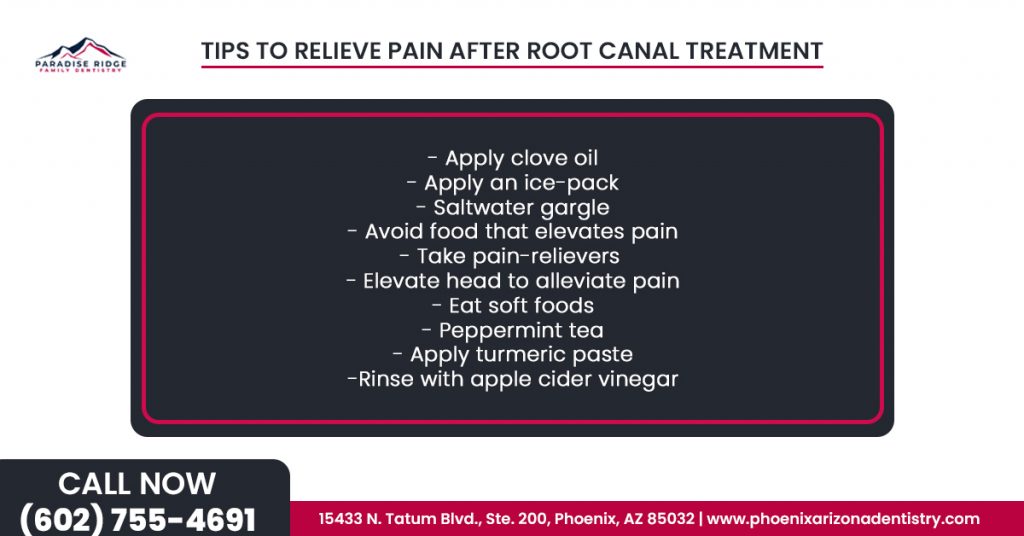
Salt water rinses, cold packs, clove oil, and over-the-counter pain relievers are among the most effective ways to ease the discomfort at home. Used consistently over the first few days, they make a meaningful difference in how manageable the recovery feels.
Take an Over-the-Counter Pain Reliever
Ibuprofen is the most effective over-the-counter option for post-root canal pain since it reduces both pain and the inflammation driving it. Take it as directed on the packaging and consistently for the first two to three days rather than waiting until pain becomes difficult to manage.
If ibuprofen is not suitable, paracetamol provides pain relief without the anti-inflammatory effect. Your dentist may recommend alternating between the two for more sustained relief during the first 48 hours.
Apply a Cold Pack
Hold a cold pack wrapped in a thin cloth against the outside of the cheek near the treated tooth for 15 to 20 minutes at a time during the first 24 to 48 hours. Cold reduces the inflammation in the surrounding tissue and temporarily numbs the area, providing meaningful relief during the peak of post-procedure discomfort.
Do not apply heat to the area in the first few days. Heat increases blood flow to an already inflamed area and can worsen throbbing rather than ease it.
Apply Clove Oil
Clove oil contains eugenol, a natural anaesthetic and antibacterial compound used in professional dentistry for decades. A small amount applied to the gum around the treated tooth with a cotton swab provides temporary numbing relief that can ease acute throbbing between doses of pain medication.
Always dilute clove oil in a carrier oil before applying since undiluted clove oil can burn gum tissue. Apply carefully to the gum around the tooth rather than directly on the crown or filling.
Rinse With Warm Salt Water
Mix half a teaspoon of salt in a cup of warm water and swish gently around the treated area for 30 seconds, two to three times daily. Salt water reduces bacterial load around the tooth, eases gum inflammation, and keeps the area clean during the healing period without irritating sensitive tissue.
This is one of the most consistently recommended home measures after any dental procedure and is safe to use as often as needed.
Elevate Your Head While Sleeping
Lying flat increases blood flow to the head and can intensify throbbing pain overnight. Sleeping with your head elevated on an extra pillow reduces that blood pressure in the area and makes nighttime pain noticeably more manageable during the first few days of recovery.
This is a simple adjustment that makes a real difference, particularly for people whose pain feels worse when lying down than when sitting upright.
Eat Soft Foods and Avoid Biting on the Tooth
Stick to soft foods that require minimal chewing during the first few days of recovery. Yogurt, mashed potatoes, scrambled eggs, soup, and pasta put minimal stress on the treated tooth and the surrounding tissue while it heals.
Avoid biting directly on the treated tooth where possible and stay away from very hot, cold, or hard foods. The tooth and surrounding ligament are still inflamed and more sensitive to pressure and temperature than usual during this period.
Apply Peppermint
A cooled peppermint tea bag held against the gum near the treated tooth for a few minutes provides mild numbing relief through menthol, which has a natural anaesthetic effect on gum tissue. This works best as a supplementary measure alongside other remedies rather than a primary treatment on its own.
Alternatively, a small amount of diluted peppermint essential oil applied to the gum with a cotton swab produces a similar numbing effect.
Apply Turmeric Paste
Turmeric contains curcumin, a compound with documented anti-inflammatory and mild analgesic properties. Mix a small amount of turmeric powder with water to form a paste, apply it to the gum around the treated tooth, leave it for a few minutes, then rinse thoroughly with warm water.
This works best as a topical anti-inflammatory rather than a pain reliever, making it most useful during the first few days when tissue inflammation is at its peak.
Signs the Pain Is Not Normal
Most post-root canal pain follows a predictable pattern of gradual improvement. These signs indicate something more than normal healing is happening and the tooth needs to be re-evaluated.
Pain that worsens after day three: Normal healing pain improves steadily. Pain that intensifies after the first two to three days rather than continuing to fade suggests a complication.
Pain that returns after improving: If throbbing had settled and then comes back, that is one of the clearest signs of a problem rather than normal recovery.
Visible swelling: Swelling in the gum, cheek, or jaw near the treated tooth means inflammation has spread beyond the tooth itself.
Fever: A fever alongside tooth pain indicates the infection may not have been fully cleared or has spread to surrounding tissue.
A bad taste or drainage: A persistent salty or foul taste near the treated tooth can indicate residual infection or a failing seal.
Extreme pain not responding to medication: Pain that over-the-counter medication does not reduce meaningfully needs professional evaluation rather than continued home management.
When Should you consult a dentist
The above-mentioned remedies can help you relieve mild pain after root canals. Normal discomfort is expected however, if the pain continues after a week, it is time you consult a dentist. Also, If the pain is excessive or you feel the throbbing pain is worsening, it may indicate a complication. Consult your dentist immediately if you feel unbearable pain, fever or swelling, as this could indicate other issues that may require attention.
Visit Paradise Ridge Family Dentistry for Root Canal Treatment in Phoenix
If you are looking for a root canal dentist in Phoenix call us on (602) 962-5318 or book an appointment online. We have a team of endodontists, who can help you with root canal treatment using advanced tools and technologies and achieve pain free and healthy smiles.
Frequently Asked Questions
Is it normal for your tooth to throb after a root canal?
Yes, for the first two to three days. Throbbing that gradually improves is a normal healing response. Throbbing that worsens, returns after improving, or comes with swelling or fever is not normal and needs dental attention.
How long does pain last after a root canal?
Most people notice significant improvement within two to three days. Mild tenderness when biting can persist for up to two weeks. Pain still present and unimproved after a week needs a dental evaluation.
What is the best pain relief after a root canal?
Ibuprofen is generally the most effective option since it reduces both pain and inflammation. A cold pack, salt water rinse, and clove oil used alongside it provide additional relief during the first few days.
Why is my root canal pain worse at night?
Lying flat increases blood flow to the head and intensifies throbbing. Sleeping with your head elevated on an extra pillow reduces this effect and makes nighttime pain more manageable.
Can I eat after a root canal?
Yes, once the anesthesia has worn off. Stick to soft foods for the first few days and avoid biting on the treated tooth until a permanent crown or filling has been placed.
When should I call my dentist after a root canal?
Call if pain is worsening rather than improving after day three, if you notice swelling, fever, or a bad taste, or if the pain is severe enough that over-the-counter medication is not providing relief.